
Foot MRI Cost: What Sets the Price and How to Pay Less
What a foot MRI typically costs, why forefoot, midfoot and contrast scans are billed differently, how insurance applies, and how to lower your bill.
Key Takeaways
- Foot MRI prices vary by country, insurer and facility; one US analysis found a median negotiated lower-extremity MRI price of $333
- Forefoot, midfoot and hindfoot scans may be coded differently, and each foot is a separate exam
- Contrast adds cost and is mainly needed for infection, Charcot foot and soft-tissue masses
- Independent imaging centers often charge less than hospital departments for the same planned scan
- Insurers usually expect an X-ray first and may require prior authorization
- Urgent foot symptoms, especially in diabetes, should never wait for a price comparison
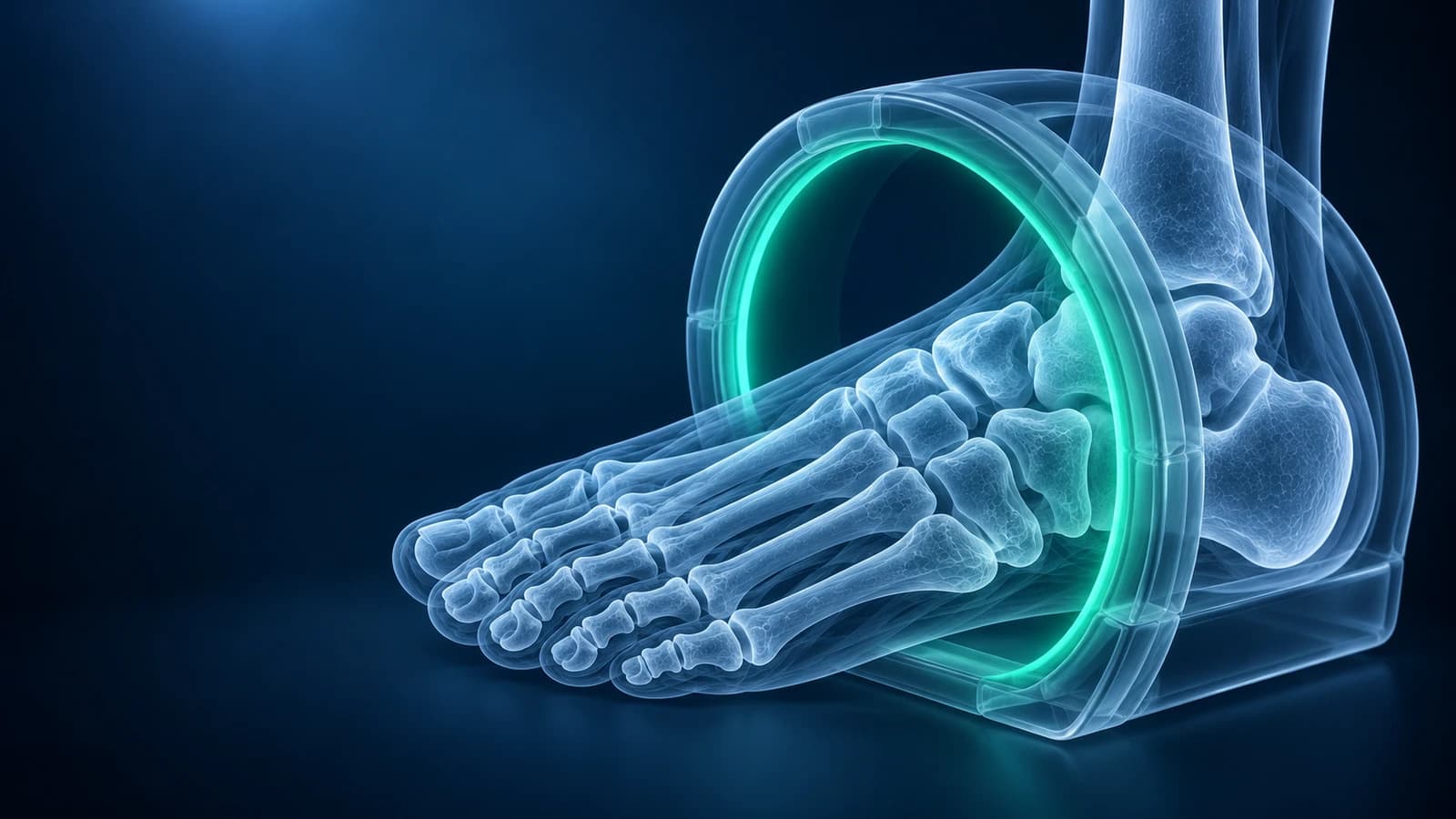
There is no single price for a foot MRI.
In the United States, the in-network rate an insurer negotiates for a lower-extremity MRI is often a few hundred dollars: an analysis of one large insurer's 2022 published prices found a median of $333, with the middle half of prices between $251 and $456. Self-pay and hospital list prices can be several times higher. Outside the US, the cost depends on your country's health system and your insurer, so treat every figure on this page as a typical range rather than a quote.
The foot is an awkward body part to price. It has 26 bones and more than 30 joints, the toes and the heel sit far apart, and the questions people bring to the scanner range from a pinched nerve between two toes to a suspected bone infection in a diabetic foot. Those differences change what gets ordered, how it is coded, and therefore what you are asked to pay. This guide explains those levers so you can ask the right questions before you book.
How much does a foot MRI cost?
Three numbers matter, and they are rarely the same. The negotiated rate is what your insurer has agreed to pay the facility. The patient share is what you pay after your deductible, copay or coinsurance is applied to that rate. The self-pay price is what a facility charges someone paying directly. Published US research gives a feel for the spread: the insurer analysis above found a typical negotiated lower-extremity MRI price of about $250 to $460, and a national telephone survey of outpatient imaging centers found self-pay prices for a comparable non-contrast knee MRI ranging from $259 to $2,042, with gaps of more than $1,500 between centers in the same city.
Those studies are a few years old and come from one country, so use them to understand the shape of the market, not to predict your bill. In countries with public health systems a medically referred foot MRI often carries no direct charge but may involve a wait, while private self-pay prices vary widely between countries, cities and clinics. Wherever you are, the only reliable number is the one a specific facility and insurer confirm for your exact scan.
Why does the part of the foot being scanned change the price?
A high-resolution foot MRI usually covers one region rather than the whole foot from heel to toe tip. A forefoot study looks at the metatarsal heads, toe joints and the spaces between them, which is where a Morton's neuroma or a plantar plate tear lives. A midfoot study centers on the tarsometatarsal joints and the navicular. A hindfoot study covers the heel bone and the plantar fascia, and overlaps with what is often scanned as an ankle MRI. If the pain spans two regions, two separate sequences or even two separately billed scans may be needed.
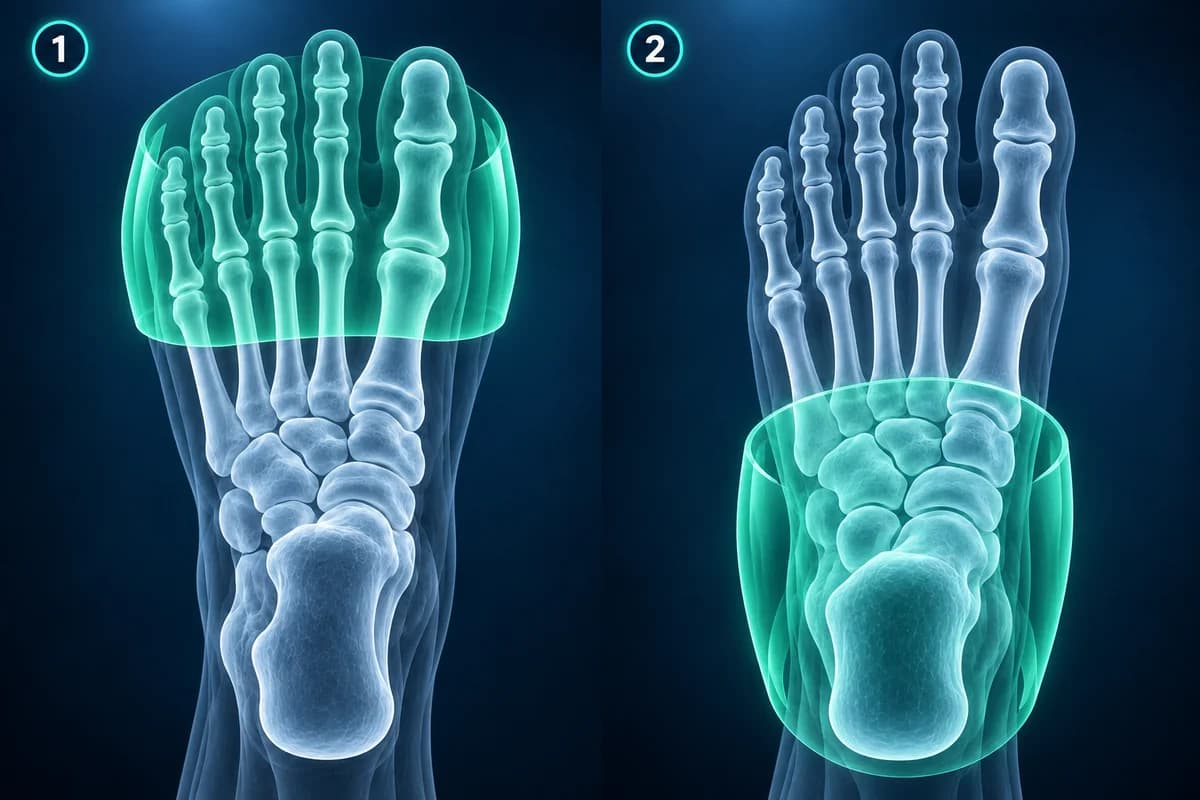
In the US this shows up in the billing codes. Lower-extremity MRI uses two code families: 73718, 73719 and 73720 for a lower extremity other than a joint (without contrast, with contrast, and without then with contrast), and 73721, 73722 and 73723 for a joint of the lower extremity in the same three versions. Which family a foot scan falls under depends on the region ordered and the facility's coding practice. When you ask for a price, ask which code the facility will use, because a quote for the wrong code is not a quote for your scan.
Both feet are two exams. If symptoms are on both sides, each foot is normally scanned and billed separately, which roughly doubles the cost. It is worth asking whether imaging the more painful foot first would answer the clinical question.
Does a foot MRI with contrast cost more?
Yes. A study with intravenous gadolinium contrast is coded and priced as a separate, more expensive exam, and it takes longer on the table. Contrast is not needed for most foot questions: stress fractures, plantar fasciitis, neuromas, tendon tears and ligament injuries are all assessed well without it.
Contrast earns its cost mainly in the diabetic or infected foot. It helps show an abscess, separate dead from living tissue, and support the difference between bone infection and Charcot foot, two conditions that can look alike. It is also used for soft-tissue masses. Because gadolinium is cleared by the kidneys, people with reduced kidney function, which is common in long-standing diabetes, may need a blood test first, and some will be scanned without contrast instead.
Is a foot MRI cheaper at an imaging center than at a hospital?
Often, yes. A foot MRI bill has two parts: the technical component, which pays for the scanner, the room and the technologist, and the professional component, which pays the radiologist who reads it. Hospital outpatient departments usually add a facility fee to the technical part, while independent imaging centers usually do not. The image quality depends on the scanner, the coil and the protocol, not on whether the building is a hospital.
There are good reasons to stay in a hospital system: a scan ordered during an admission, a diabetic foot infection that may need surgery the same week, or a team that wants the images read by the radiologists they work with. For a planned scan of a stable problem, comparing two or three accredited outpatient centers is reasonable.
Will insurance cover a foot MRI?
Most plans cover a foot MRI when it is medically justified, and many require prior authorization. Insurers commonly expect a standing foot X-ray first, because radiographs are the usual starting test for both injuries and chronic foot pain in the American College of Radiology appropriateness criteria. They also often expect a period of treatment, such as rest, footwear changes or physiotherapy, before an MRI for a problem that is not urgent.
A denied authorization is often a paperwork problem rather than a final answer. The ordering clinician can usually resubmit with the X-ray result, the length of symptoms and what has been tried. Also check that both the imaging facility and the radiology group that reads the scan are in your network, since they bill separately.
How can you lower the cost of a foot MRI?
Ask for a code-specific price. Give the facility the exact billing code or the exact scan on your referral, ask whether contrast is included, and ask whether the radiologist's fee is part of the quote. Ask for the self-pay price too: when your deductible is high, a cash price can be lower than your share of the insured rate.
Use the price tools you already have. Many insurers offer an estimator in their member portal, and US hospitals must publish their standard charges and a list of shoppable services under the federal hospital price transparency rule. Health savings and flexible spending accounts can be used for a medically necessary scan.
Avoid paying for the same scan twice. If you had foot imaging elsewhere, bring the disc or download link; a new clinician may be able to work from it. You can open those files in our free MRI viewer to check what was scanned before booking another study. Finally, confirm the region on the referral matches where it hurts: a hindfoot scan will not answer a question about the second toe.
Do you actually need a foot MRI?
Often an X-ray or ultrasound answers the question for less. Standing X-rays show bunions, arthritis, alignment and most fractures. Ultrasound is quick and well suited to the plantar fascia, neuromas and many tendons. Our guide to foot MRI vs X-ray vs ultrasound walks through which test fits which question, and most heel pain needs no scan at all, as covered in do you need an MRI for plantar fasciitis.
MRI is worth its price when it changes what happens next: a suspected stress fracture that is not on the X-ray, a midfoot injury where a Lisfranc injury may have been missed, a possible bone infection, or pain that has not settled after a fair trial of treatment. Once you have the images, you can upload them for a plain-language explanation.
When should cost not delay a foot scan?
Some foot problems need same-day care whatever the price. Seek urgent help if you have diabetes and your foot is suddenly hot, red or swollen, if you have a fever with foot pain, if a wound reaches bone or is draining, if you cannot bear weight after an injury, or if a toe turns pale, blue or cold. In these situations the emergency team decides which imaging is needed, and the cost conversation comes later. This page is general information and not a diagnosis or financial advice.
Frequently Asked Questions
How much does a foot MRI cost without insurance?
It depends heavily on where you are and where you go. In the US, self-pay prices at outpatient imaging centers have been documented from a few hundred dollars to around two thousand for a comparable lower-extremity scan, and hospital list prices can be higher still. Call two or three accredited centers, give them the exact scan on your referral, and ask for a bundled self-pay price that includes the radiologist's report.
Is a foot MRI more expensive than an ankle MRI?
Not necessarily. Both use the same lower-extremity code families, and many facilities price them the same. Differences come from the region coded, whether contrast is used, and whether more than one region or both feet are scanned. A hindfoot question is sometimes answered on an ankle MRI, so ask your clinician which study actually covers the painful area.
Why does my insurer want an X-ray before a foot MRI?
Because an X-ray is the recommended first test for most foot injuries and chronic foot pain. It is quick, cheap, shows alignment while you stand, and answers many questions on its own. An MRI is then targeted at what the X-ray could not show, such as bone marrow edema, ligament tears or early infection.
Do I need contrast for my foot MRI?
Usually not. Fractures, plantar fasciitis, neuromas, tendon and ligament injuries are assessed without it. Contrast is mainly used when infection, an abscess, Charcot foot or a soft-tissue mass is suspected. If your referral says "with contrast" and you are unsure why, ask the ordering clinician before the appointment.
How long does a foot MRI take?
A single-region study without contrast usually takes around half an hour on the table, and a contrast study takes longer. Keeping the foot still matters more than anything else for image quality, so tell the technologist if you are in pain before the scan starts.
Sources
- Chartock BL, Simon K, Whaley CM. Transparency in Coverage Data and Variation in Prices for Common Health Care Services. JAMA Health Forum. 2023;4(10):e233663.
- Pasalic D, Lingineni RK, Cloft HJ, Kallmes DF. Nationwide price variability for an elective, outpatient imaging procedure. J Am Coll Radiol. 2015;12(5):444-452.
- Expert Panel on Musculoskeletal Imaging; Said N, Fox MG, Nacey NC, et al. ACR Appropriateness Criteria Chronic Foot Pain: Update 2025. J Am Coll Radiol. 2026;23(4):681-699.
- Centers for Medicare & Medicaid Services. Hospital Price Transparency.
Related Articles
X-ray, MRI, ultrasound or CT for foot pain? What each test shows and misses, which one usually comes first, and how the choice changes for stress fractures, neuromas, plantar fasciitis, Lisfranc injuries and the diabetic foot.
Most plantar fasciitis needs no MRI. Learn when an X-ray, ultrasound or MRI is worth it, what each shows, and what heel pain report phrases mean.
A plain-language guide to your foot MRI: how T1, fluid-sensitive and STIR images differ, which plane shows what, and what bone marrow edema, plantar plate tear and neuroma mean in your report.
Related Conditions
Understand your imaging before your next appointment
MRI, X-ray or CT from a CD, folder or ZIP. A PDF report or photos of the films work too.
Free to open and preview, no account needed. An optional AI report from $10 explains your images in plain language, with questions for your doctor.
Your raw files stay on this device. Only rendered images and minimal context are sent when you request an AI report.
Medical Disclaimer: This page is for informational and educational purposes only. It does not constitute medical advice, diagnosis, or treatment. AI-generated analysis may contain errors. Always consult a qualified healthcare professional for medical decisions. Full Disclaimer